
 English
 Spanish
 Russian
 Arabic
 Italian


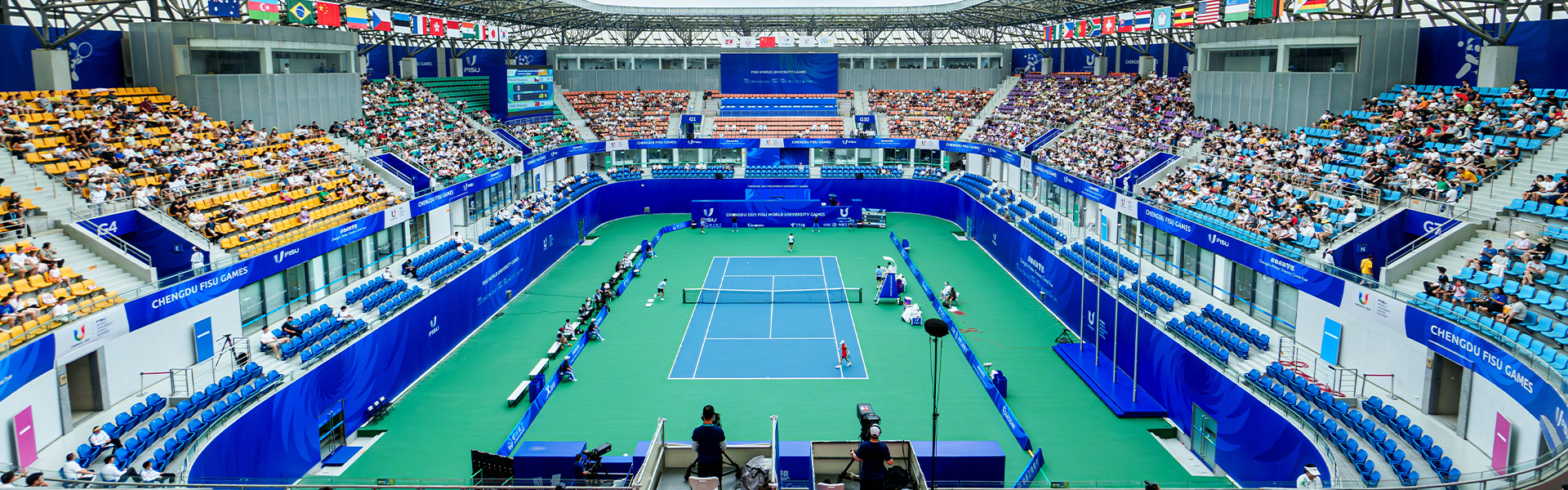
Inside an LED Sports Lighting Simulated Transportation Testing Laboratory
Inside an LED Sports Lighting Simulated Transportation Testing Laboratory
From the factory to the sports venue, an LED sports lighting fixture may travel hundreds or even thousands of kilometers—and sometimes across oceans.
During transportation, fixtures can be exposed to truck vibration, forklift handling, loading and unloading impacts, sorting, and repeated movement inside shipping containers. Every stage puts the product and its packaging to the test.
For professional sports lighting fixtures, transportation reliability is just as important as lighting performance.
A typical sports light can weigh dozens of kilograms and contains precision optical components, LED modules and electronic drivers. If the fixture is not properly secured or adequately protected during transportation, even relatively minor impacts can result in scratches, shifted optical components or loose parts. More severe impacts may cause structural deformation or damage to electrical connections.
Discovering these problems only after the shipment arrives can lead to replacement costs, additional logistics expenses and project delays.
That is why simulated transportation testing is an important part of quality control before sports lighting fixtures leave the factory.
01 | Why Is Simulated Transportation Testing Important for Sports Lighting?
Transportation conditions are rarely ideal.
A sports lighting fixture may experience:
- Impacts during forklift handling
- Continuous vibration on highways
- Repeated bumps on local roads
- Sudden shocks during loading and unloading
- Movement and shaking inside shipping containers during sea transportation
Each of these conditions can potentially affect the fixture or its packaging.
The International Safe Transit Association (ISTA) has established widely recognized testing practices for evaluating the protective performance of product packaging during transportation.
By reproducing transportation conditions in a controlled laboratory environment, manufacturers can identify potential weaknesses in packaging design before products are shipped. Packaging materials, cushioning systems and fixing methods can then be optimized accordingly.
For high-value sports lighting products, rigorous transportation testing is an important part of ensuring that products arrive at the project site in reliable condition.
At SCL Sports Lighting, every sports lighting fixture undergoes rigorous simulated transportation testing before shipment.
The goal is simple:
If a fixture can withstand the journey in the laboratory, it is better prepared for the journey from the factory to the sports venue.
02 | Simulated Transportation Vibration Testing: Reproducing the Journey
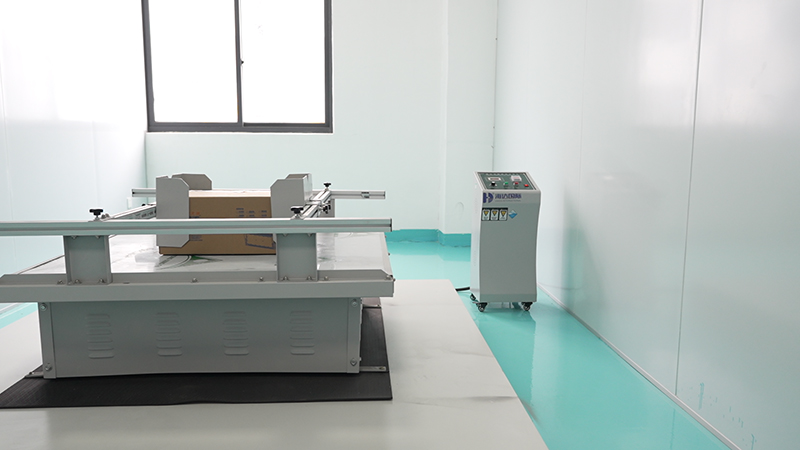
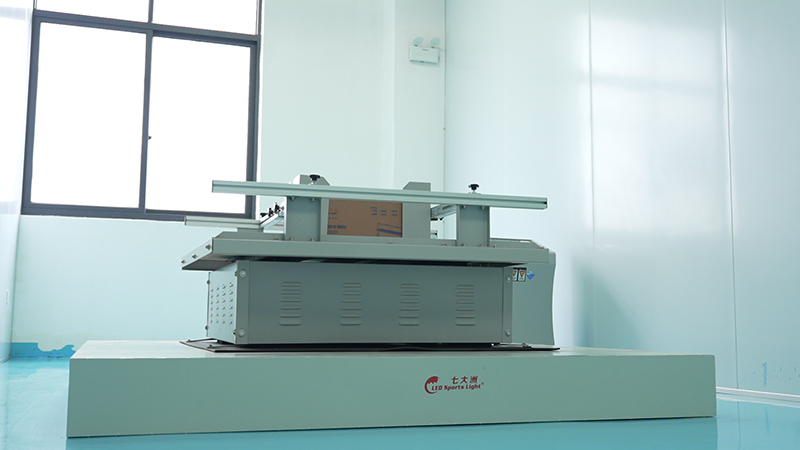
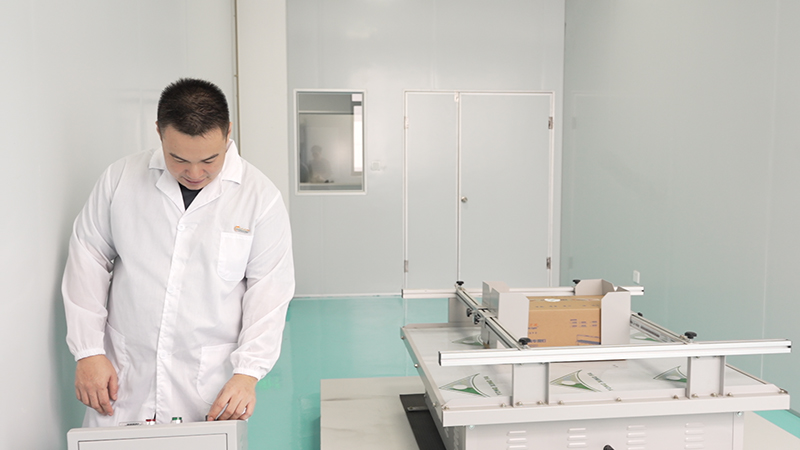
At the heart of the laboratory is a simulated vehicle transportation vibration testing system.
Its purpose is straightforward: to reproduce the types of vibration and movement that sports lighting fixtures may experience during real-world transportation.
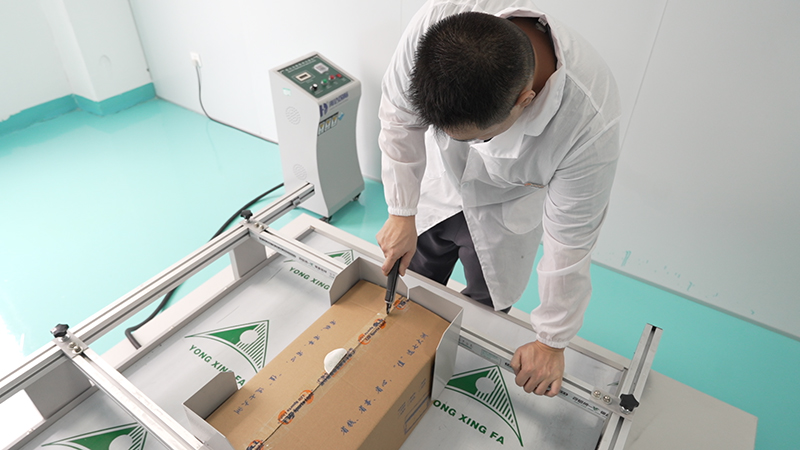
During testing, a fully packaged fixture sample is securely positioned on the vibration platform. The equipment then operates at predetermined test parameters, subjecting the packaged product to controlled vibration.
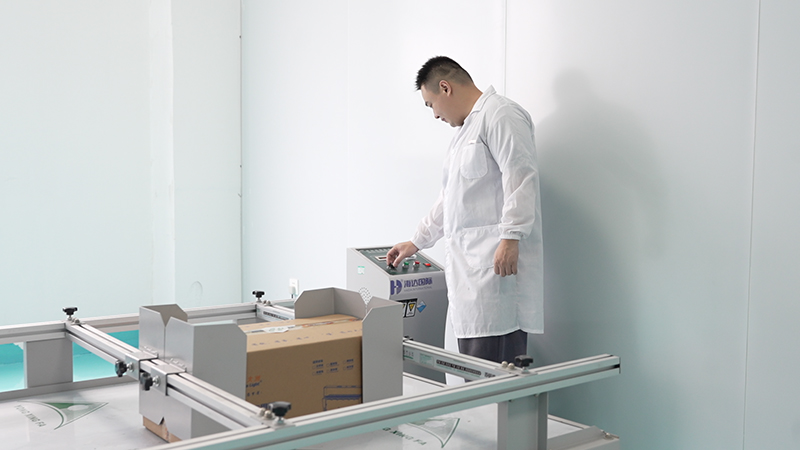
The testing process considers movement in multiple directions, including:
- Vertical movement
- Horizontal movement
- Front-to-back movement
This helps simulate the multidirectional forces that can occur during transportation.
Proper Fixing Is Critical
One detail that is easy to overlook is how the fixture is secured during the test.
The sample should not simply be clamped rigidly in place. Appropriate clearance needs to be maintained so that the fixture and its packaging can respond to vibration in a way that more closely represents actual transportation conditions.
In real-world logistics, cartons and packages are not completely motionless.
When a truck passes over uneven roads, the entire package can bounce, shake and move. If the product is excessively constrained during laboratory testing, the test may not accurately represent the forces experienced during actual transportation.
Therefore, realistic test conditions are essential for meaningful transportation reliability verification.
The simulated scenarios are designed to represent different transportation conditions, including continuous vibration during highway transportation, larger low-frequency movements on ordinary roads, and sudden impacts associated with forklift handling.
The objective is to evaluate whether the fixture and its packaging can withstand repeated movement and impact throughout the logistics process.
03 | After the Vibration Test: Every Detail Must Be Inspected
Completing the vibration test does not mean the evaluation is finished.
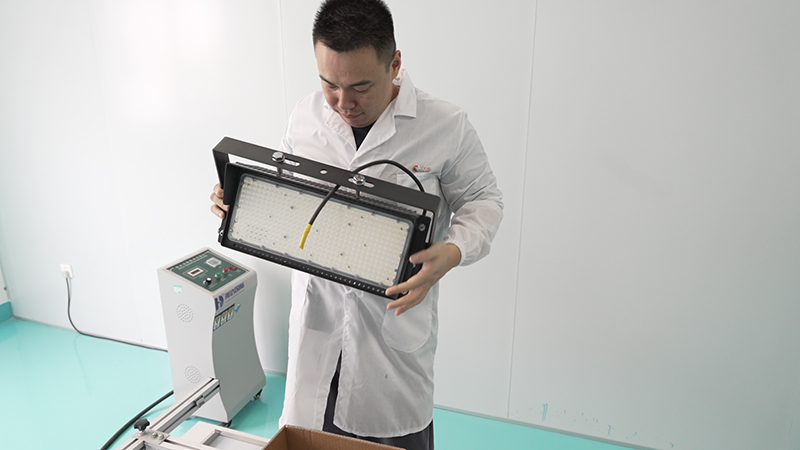
After testing, technicians conduct a detailed inspection of the packaging, lighting fixture and accessories.
Packaging Inspection
The carton and packaging structure must remain intact.
Technicians check for:
- Open or damaged seams
- Cracks
- Broken protective packaging
- Damaged accessory bags
Fixture Appearance
The fixture should remain free from significant transportation-related damage.
Technicians inspect the housing and surface for:
- Scratches
- Dents
- Visible damage
- Damaged protective bags or component packages
Structural Inspection
The fixture must maintain its structural integrity.
The inspection focuses on:
- Structural deformation
- Loose components
- Missing or detached parts
- Damaged hardware
- Damaged optical components
- Damaged electrical components
Electrical Performance Test
The most important step is the power-on test.
After transportation simulation, the fixture is powered on to verify that its electrical performance remains stable and that it can operate normally.
Ultimately, every inspection answers the same question:
After thousands of kilometers of transportation, is the fixture still in the same reliable condition as when it left the factory?
04 | Full-Scenario Transportation Reliability Verification
A sports lighting fixture must pass more than a quality inspection before reaching the sports venue.
It must also withstand the logistics journey.
Simulated transportation vibration testing allows manufacturers to reproduce potential vibration, impact and movement conditions in the laboratory before the product enters the supply chain.
This provides an opportunity to identify potential problems early and resolve them before shipment.
The objective is not simply to make the product “survive a test.”
It is to ensure that professional sports lighting fixtures are robust, durable and properly protected throughout the transportation process, regardless of how far they need to travel.
A Real-World Example: Mandela National Stadium, Uganda
A real international project demonstrates why transportation reliability matters.
Located in East Africa, Mandela National Stadium in Uganda was preparing for upcoming World Cup qualification and Africa Cup competitions. The existing lighting fixtures could not meet the required acceptance conditions, creating an urgent need for a replacement lighting solution.
SCL Sports Lighting was called upon to deliver the project under an extremely tight schedule.
The logistics timeline was highly demanding:
17th — Order confirmed and production started
20th — Fixtures shipped from the factory
22nd — Departed Guangzhou by air
23rd — Arrived in Uganda
24th — Delivered to the installation site
In just one week, approximately 8,000 kg of sports lighting fixtures were manufactured, transported across continents and delivered to the installation location.
For projects with strict deadlines, transportation reliability is not a secondary consideration.
A product that leaves the factory in perfect condition but arrives damaged can still affect the entire project schedule.
This is why packaging design, simulated transportation testing and pre-shipment inspection are important components of international sports lighting delivery.
Quality Does Not End at the Factory Gate
For professional sports lighting manufacturers, product quality is not limited to LED performance, optical design or electrical reliability.
A truly reliable product must also be able to withstand the journey from the factory to the sports venue.
Simulated transportation testing helps identify potential risks before shipment, improve packaging protection and provide an additional layer of quality assurance for international projects.
Behind every transportation test report is SCL's commitment to maintaining a high quality standard—from manufacturing and testing to packaging, logistics and final delivery.
Because professional sports lighting should arrive at the venue ready to perform.
SCL Sports Lighting — Reliable Lighting, From Factory to Field.
Need reliable LED sports lighting for your next international project? Contact SCL Sports Lighting to discuss your project requirements.

 Service Hotline:
 Email:
 Add:
Add: