
 English
 Spanish
 Russian
 Arabic
 Italian


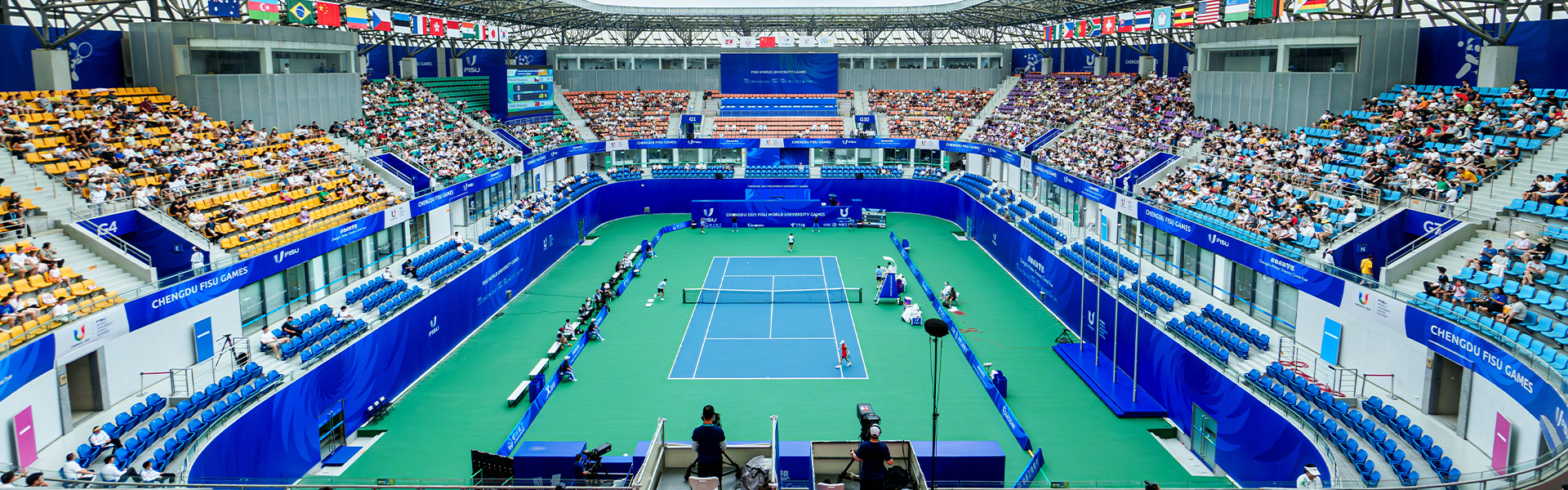
LED Sports Lighting Case Study | Zhenghe Liaojunbo Sports Center Lighting Project by SCL
For a modern sports complex, lighting is never just about “illuminating the field.” It directly affects whether competitions can be held successfully and defines the quality of everyday sports experiences for the public.
Sports lighting must meet two core requirements:
- Professional competition standards (including broadcast requirements)
- Visual comfort for daily sports use
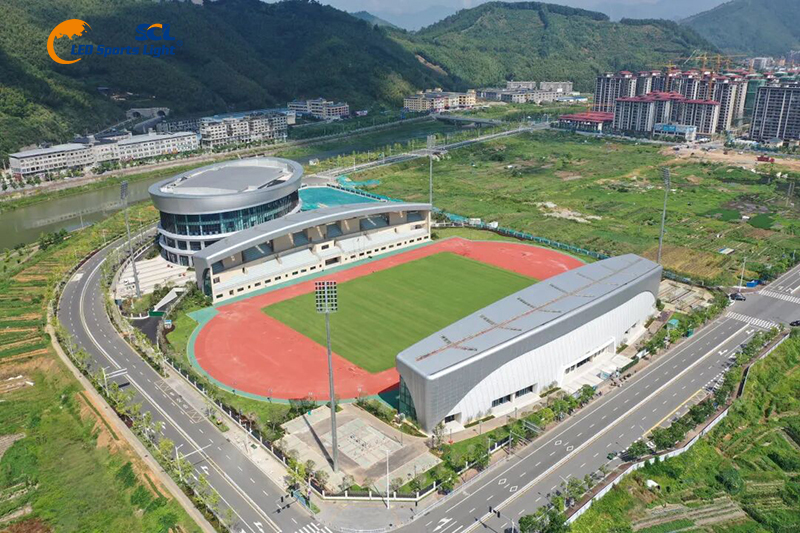
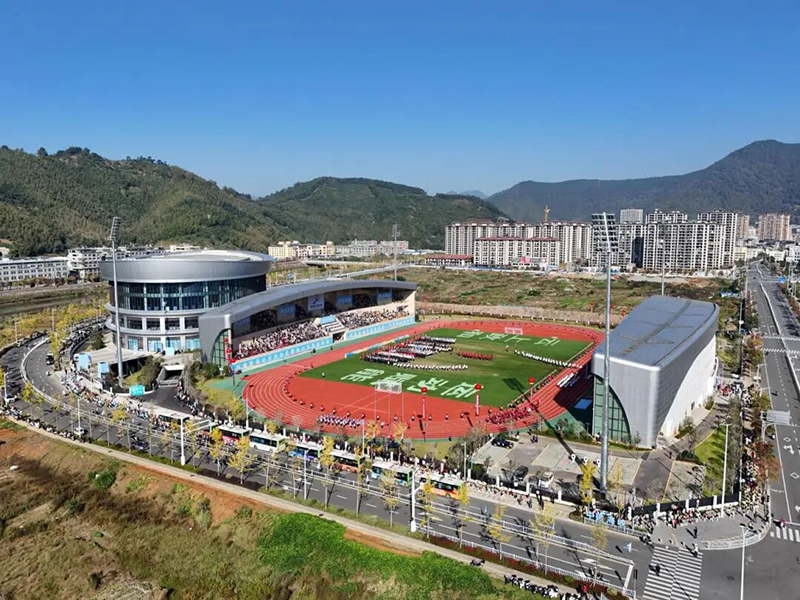
As a key provincial project in Fujian, the Zhenghe Lijunbo Sports Center covers approximately 27,000㎡, consisting of a stadium and a public fitness center, including a football field, basketball hall, swimming pool, and badminton/ping-pong areas.
Key Challenges
The main challenge of a multi-functional sports center is that:
👉 Different sports require completely different lighting environments
For example:
- Football/Track: uniform long-distance illumination
- Badminton: fast tracking with high color rendering
- Swimming: anti-glare performance and humidity resistance
- Basketball: overall uniformity with no dark zones
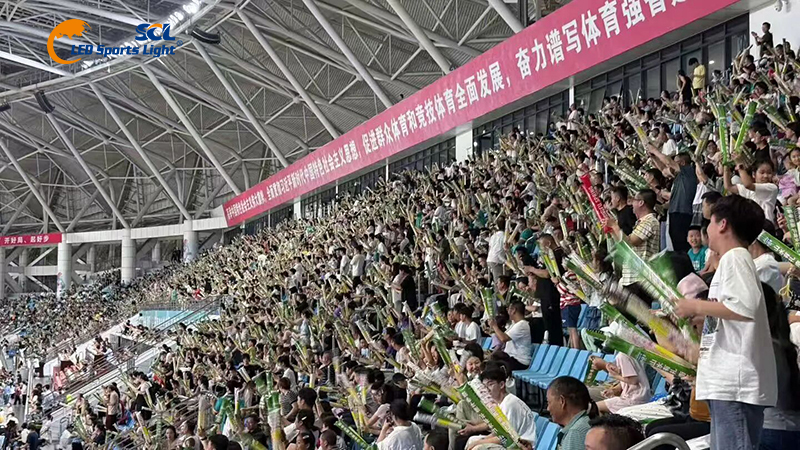
Lighting Solutions by SCL
SCL delivered an integrated LED sports lighting system covering five key areas:
- Football & athletics stadium
- Basketball hall
- Badminton courts
- Swimming pool
- Spectator areas
A unified lighting strategy was implemented while customizing solutions for each sport.
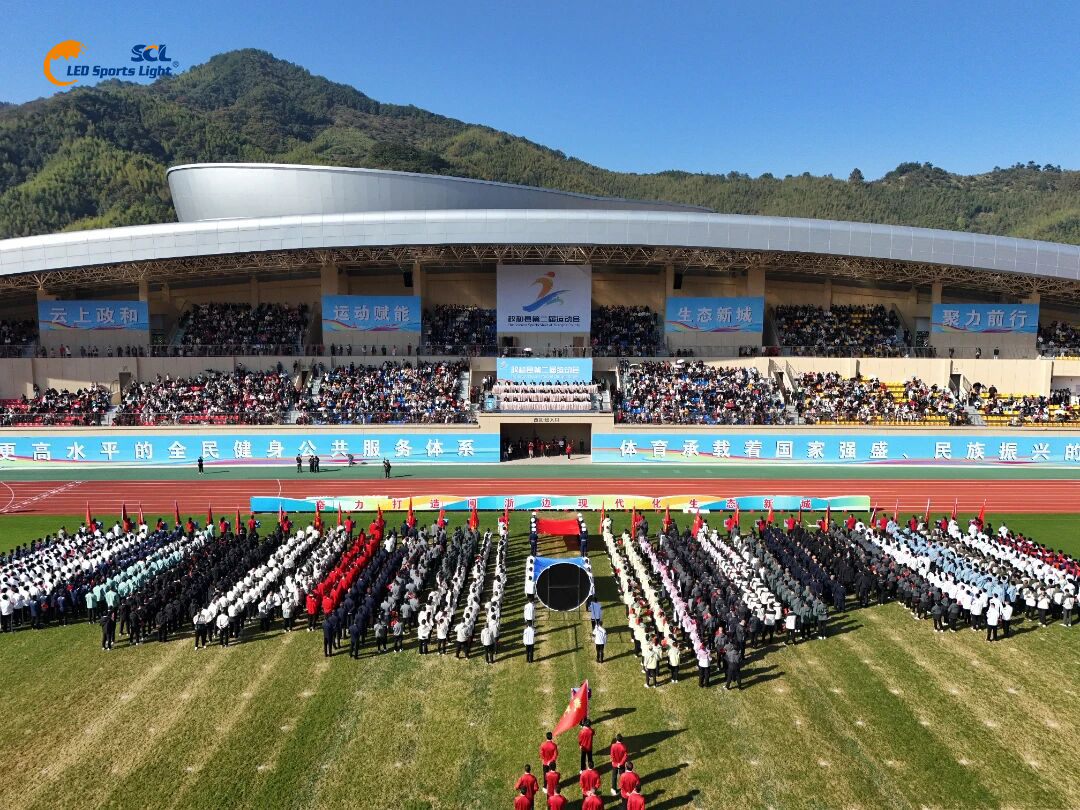
Stadium Lighting
The stadium is the core facility of the sports center and hosts major events.
SCL achieved:
- High lighting uniformity
- Flicker-free performance
- Broadcast-grade illumination
- Zoned lighting design (track, long jump, throwing areas)
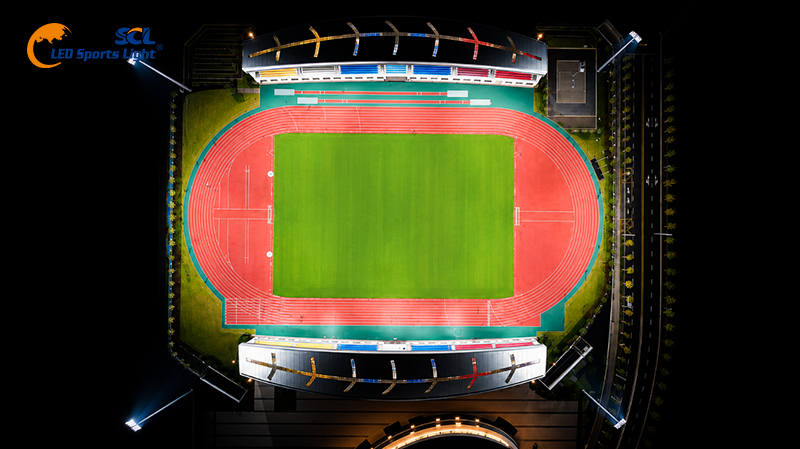
Spectator lighting was independently controlled to eliminate glare interference.
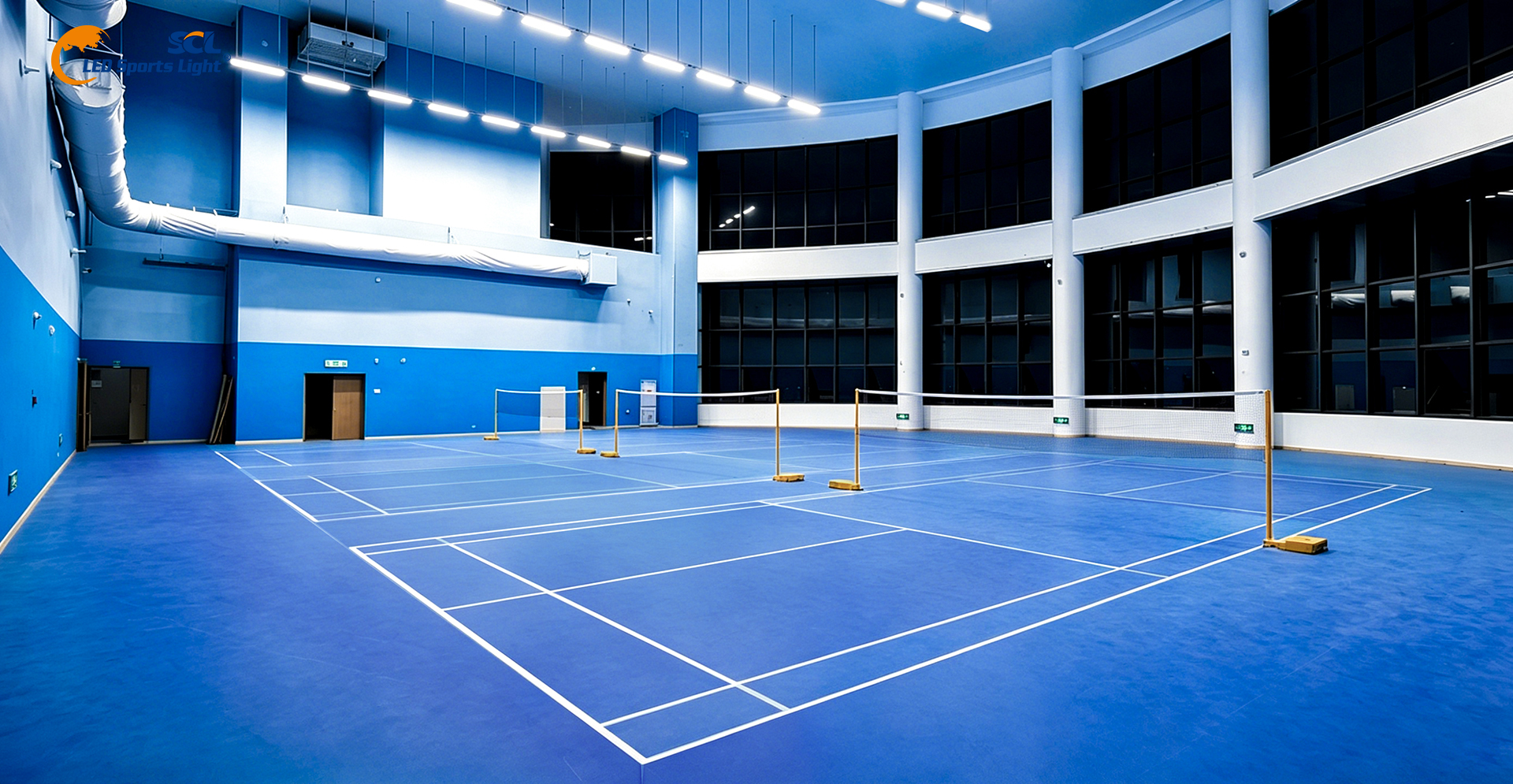
Badminton Court Lighting
Badminton requires extremely high lighting precision due to:
👉 Fast shuttle speed + complex trajectories + short reaction time
SCL solution features:
- High Color Rendering Index (CRI)
- Soft and uniform lighting environment
- Precise beam control to reduce eye fatigue
- Dual-standard compliance for competition and daily use
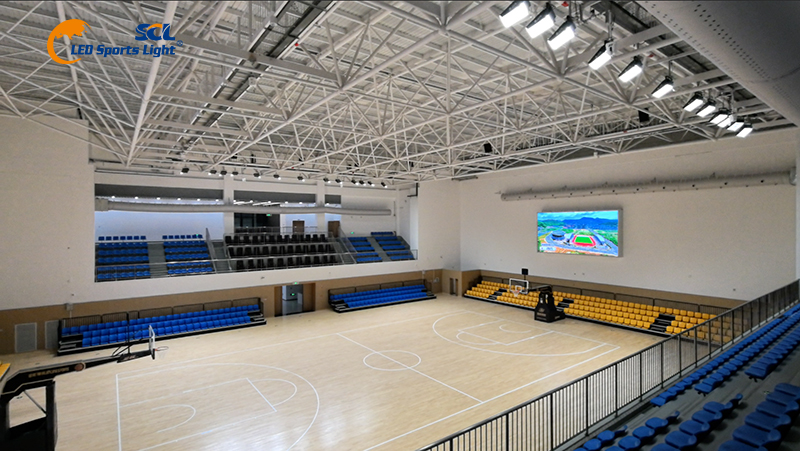
Basketball Hall Lighting
The key requirement for basketball lighting is:
👉 Consistent illumination across the entire court
SCL achieved:
- No dark zones
- No hotspots
- Uniform brightness across the court
- Suitable for both professional games and public use
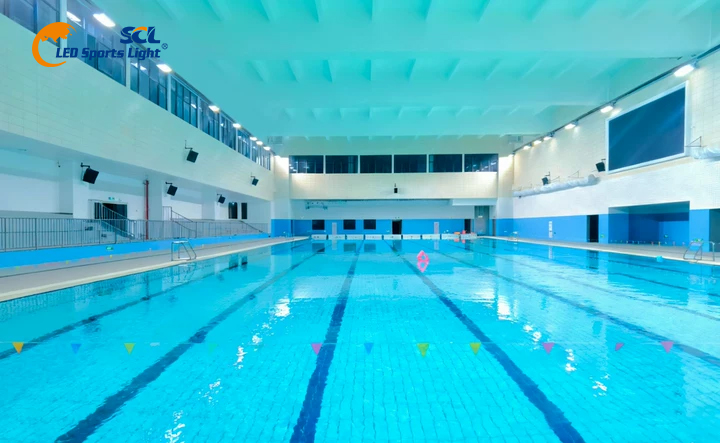
Swimming Pool Lighting
Swimming pools present complex lighting challenges:
- Water surface reflection
- Humidity scattering
- Optical glare
SCL solution:
- High IP-rated luminaires
- Anti-corrosion design
- Precise beam angle control
- Minimizing water surface glare
Project Value
This project provides a valuable reference for county-level sports facilities:
👉 Sports lighting is not just about brightness—it is a system engineering discipline.
Key values include:
- Compliance with professional competition standards
- Improved user experience for public sports
- Enhanced long-term operational value of the facility
Conclusion
High-quality sports lighting should:
👉 Design tailored lighting environments for each sport instead of simply “lighting up the space.”
As one of the drafting units of the national standard Technical Requirements for LED Sports Lighting Applications, SCL continues to advance systematic development in professional sports lighting.
Multi-sport centers host different types of sports, each requiring specific levels of illuminance, uniformity, and glare control. Therefore, a professional sports lighting system is essential.
2.What are the key performance indicators of sports lighting?
Key indicators include illuminance, uniformity, color rendering index (CRI), and flicker-free performance, all of which directly affect game quality and user experience.
3.Why does badminton require higher lighting standards?
Badminton requires higher lighting standards due to the shuttlecock’s high speed and complex trajectory, which demand rapid visual recognition and high-quality uniform lighting.
4.How is swimming pool lighting different from standard indoor sports lighting?
Swimming pools involve water reflections and high-humidity environments, requiring higher IP-rated fixtures, better glare control, and long-term stability.
5.How is glare controlled in sports lighting systems?
Glare is minimized through optimized fixture layout, precise optical design, and controlled beam angles, reducing visual discomfort for athletes and spectators.
6.Can sports lighting be used for both competitions and daily use?
Yes, modern sports lighting systems typically use multi-level control designs to meet both professional competition standards and daily recreational use.

 Service Hotline:
 Email:
 Add:
Add: