
 English
 Spanish
 Russian
 Arabic
 Italian


When Stadium Floodlights Fail: What the Uganda Football Incident Reveals About Football Ground Lighting
A football match can be interrupted in minutes when stadium floodlights fail. The recent incident at MTN Omondi Stadium in Uganda highlights why reliable football ground lighting requires more than meeting illuminance targets at the design stage.
A Floodlight Failure That Changed Matchday Plans
On October 22, 2026, the Uganda Premier League fixture between KCCA FC and UPDF FC at MTN Omondi Stadium in Lugogo was abandoned following a floodlight failure that left the pitch without adequate lighting.
On October 26, reports from Ugandan media stated that the Federation of Uganda Football Associations (FUFA) had withdrawn the stadium's approval to host night matches. Affected fixtures were moved to 4:00 p.m., and the venue would need corrective action, a fresh inspection and written clearance before night football could resume.
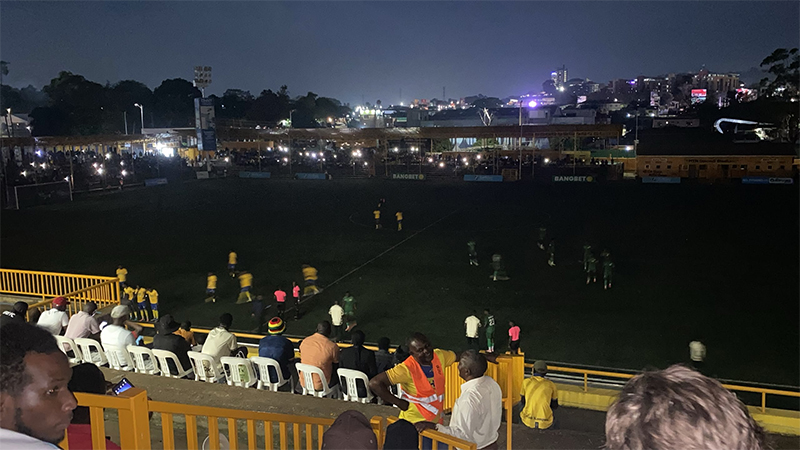
The incident demonstrates how a stadium lighting problem can extend beyond the pitch. It can disrupt match schedules, affect spectators and broadcast arrangements, and create additional operational costs for clubs and venue operators.
For facilities that depend on evening fixtures, dependable floodlighting is an essential part of matchday readiness.
Football Stadium Lighting Is About More Than Illuminance
Illuminance, measured in lux, is a fundamental parameter in football pitch lighting design. However, achieving the required illuminance during commissioning does not, by itself, guarantee reliable performance throughout a match.
A professional football ground lighting system should address several interconnected requirements.
1. Consistent Lighting Performance
Uniform illumination helps players follow the ball, judge distances and react to movement across the pitch. Excessive differences between bright and dark areas can affect visual comfort and playing conditions.
Lighting design should consider horizontal and vertical illuminance, uniformity, glare control and the requirements of the intended competition and broadcasting environment.
2. Reliable Power Supply and Electrical Infrastructure
A lighting outage may involve more than the luminaires themselves. Depending on the circumstances, possible areas for investigation include the incoming power supply, distribution equipment, protection devices, control systems, electrical connections and backup power arrangements.
The actual cause of the MTN Omondi Stadium incident should be established through a proper technical investigation rather than assumed.
For stadium operators, reviewing power supply arrangements and evaluating whether suitable backup systems are required can help reduce the risk of prolonged interruptions.
3. System-Level Testing Before Matchday
A lighting system should be assessed as an integrated installation, not simply as a collection of individual fixtures.
Commissioning and maintenance procedures can include checking electrical connections, testing control and switching functions, verifying backup arrangements where installed, measuring lighting performance and confirming that the system operates as intended under realistic conditions.
Periodic inspections and documented maintenance are equally important, particularly for venues that host frequent evening matches.
4. Maintenance and Operational Preparedness
Even a well-designed installation requires ongoing attention. Electrical components, control equipment, connections and power systems should be inspected according to their operating conditions and maintenance requirements.
Stadium operators should also establish clear procedures for responding to lighting faults, including identifying responsible personnel, troubleshooting the system and assessing whether the required lighting conditions can be restored safely.
The objective is not merely to install sufficient lighting, but to maintain the conditions required for the venue's intended use.
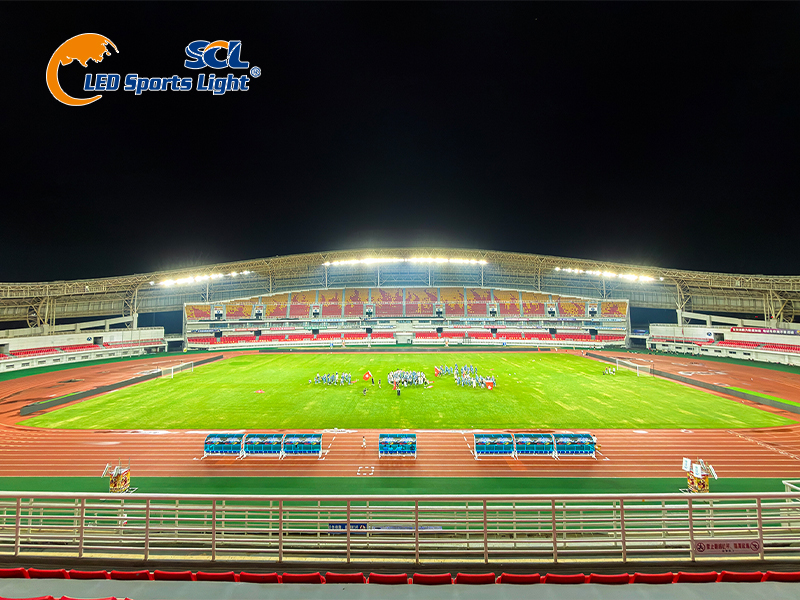
Choosing LED Football Floodlights: What Should Stadium Operators Evaluate?
When planning a new football ground lighting installation or upgrading an existing stadium, buyers should assess the complete lighting solution rather than compare luminaires on wattage or price alone.
Key considerations include:
-
Lighting design: Whether the proposed arrangement can meet the required illuminance, uniformity and glare-control targets.
-
Electrical compatibility: Whether luminaires, drivers, distribution equipment and control systems are properly matched.
-
Thermal management: Whether the fixtures can manage heat effectively under the expected operating conditions.
-
Environmental protection: Whether the selected products provide appropriate ingress protection and mechanical durability for the installation environment.
-
Control and maintenance: Whether the system supports practical operation, fault diagnosis and ongoing maintenance.
-
Compliance and verification: Whether the completed installation can be tested against the applicable competition and venue requirements.
For stadiums hosting televised matches or higher-level competitions, lighting design and verification should follow the standards and certification requirements applicable to the specific venue and competition.
How SCL Sports Lighting Approaches Football Stadium Lighting
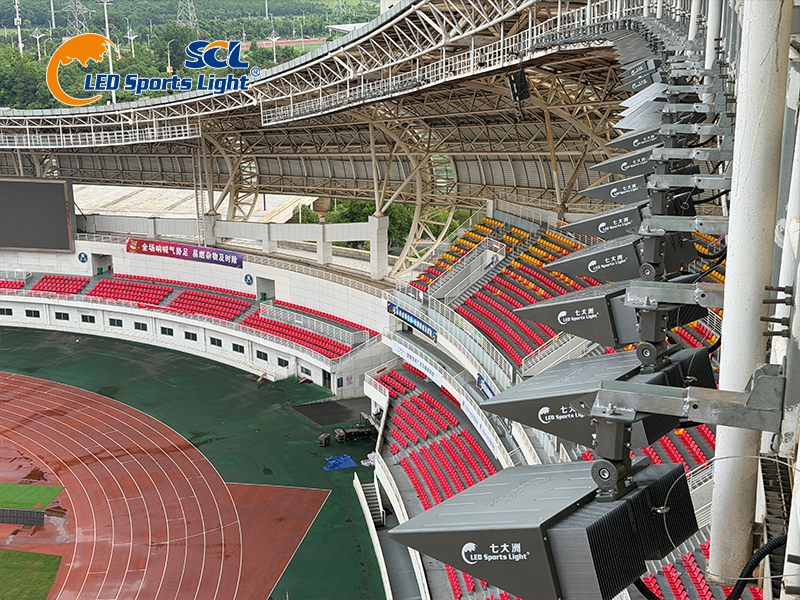
SCL Sports Lighting focuses on professional sports lighting solutions for football stadiums, training grounds and other sports facilities.
Its football lighting project experience includes installations at venues such as Mandela National Stadium in Uganda, where the supplied QDZ-1500B solution was associated with a FIFA A-class project specification and a reported illuminance level of 2,000 lux.
Other football projects include JKT Tanzania Football Club, FC Ilbirs Arena and Cambodia Olympic Sports Center, covering different facility types and lighting requirements.
These projects illustrate why football lighting solutions should be developed around the specific venue, installation conditions, performance targets and operational requirements.
Every project requires its own assessment and lighting design. Product selection, electrical configuration, installation and on-site verification should work together to deliver the intended lighting performance.
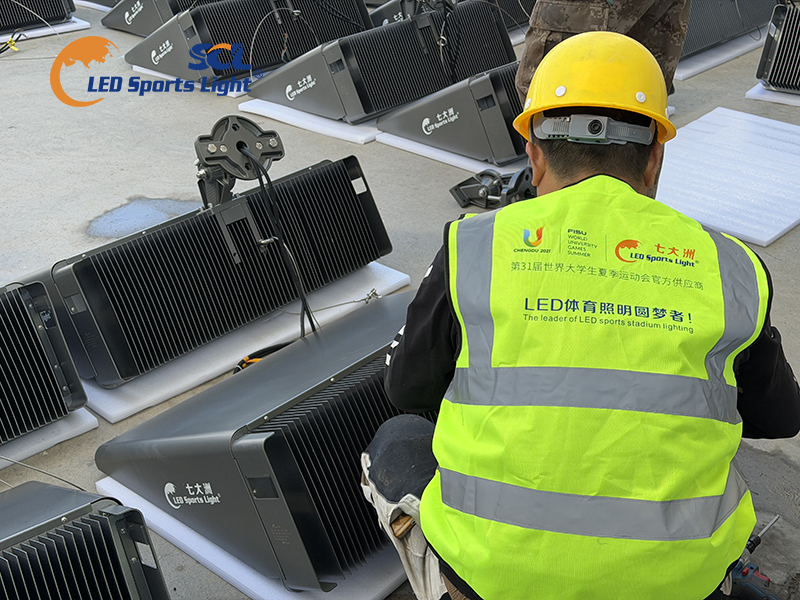
Reliable Stadium Lighting Starts Before Kick-Off
The incident at MTN Omondi Stadium is a timely reminder that football stadium lighting is an operational system as well as a design requirement.
Meeting a target illuminance level is important, but reliable evening football also depends on suitable electrical infrastructure, system testing, maintenance and effective fault-response procedures.
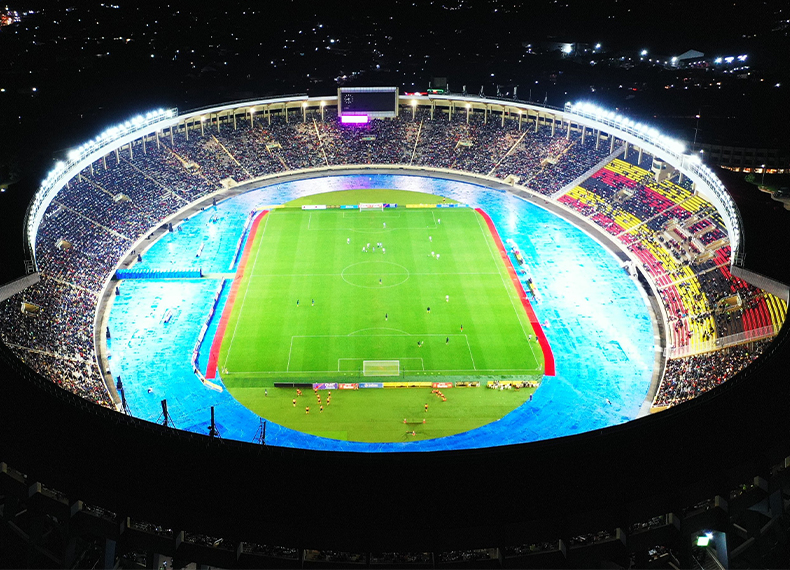
For stadium owners, football clubs and project contractors, the goal should be to build a lighting system that meets the required visual standards and remains dependable throughout its intended service life.
SCL Sports Lighting supports football facilities with professional sports lighting solutions designed around project-specific performance requirements. Careful planning, appropriate product selection and system-level verification are essential steps towards more dependable football ground lighting.

 Service Hotline:
 Email:
 Add: