
 English
 Spanish
 Russian
 Arabic
 Italian


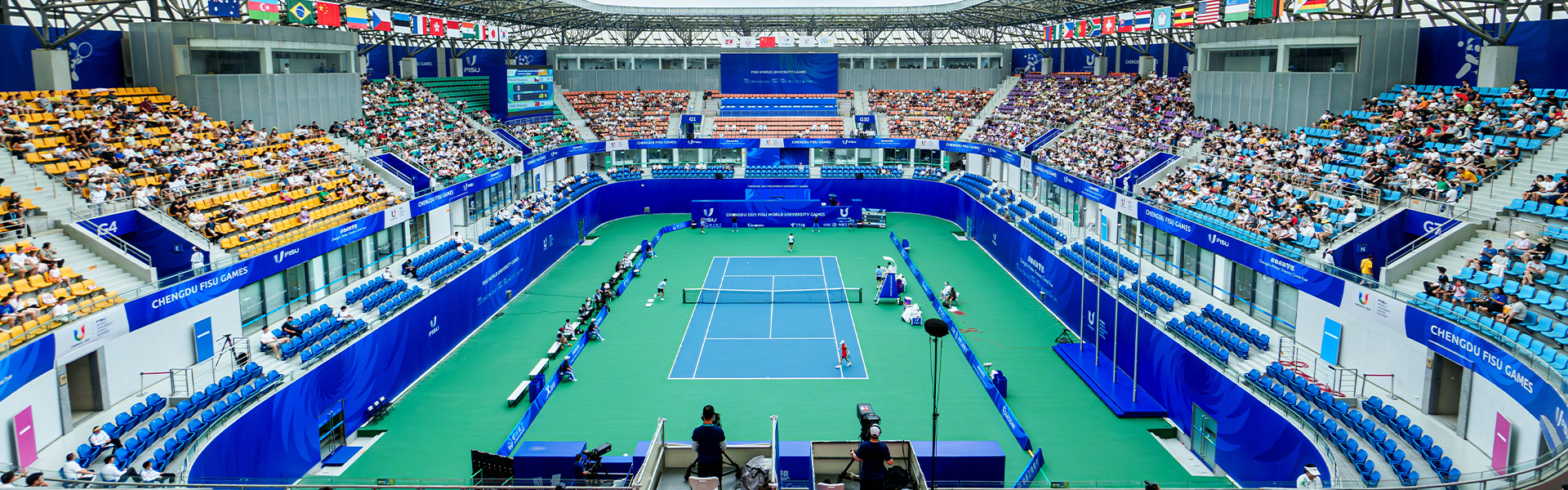
FIBA Women’s Basketball World Cup 2026: What Does Professional Basketball Lighting Need to Deliver?
When fans watch a major basketball tournament, the focus is naturally on the players, the score and the action on the court.
But behind every clear broadcast image is another important part of the venue: professional sports lighting.
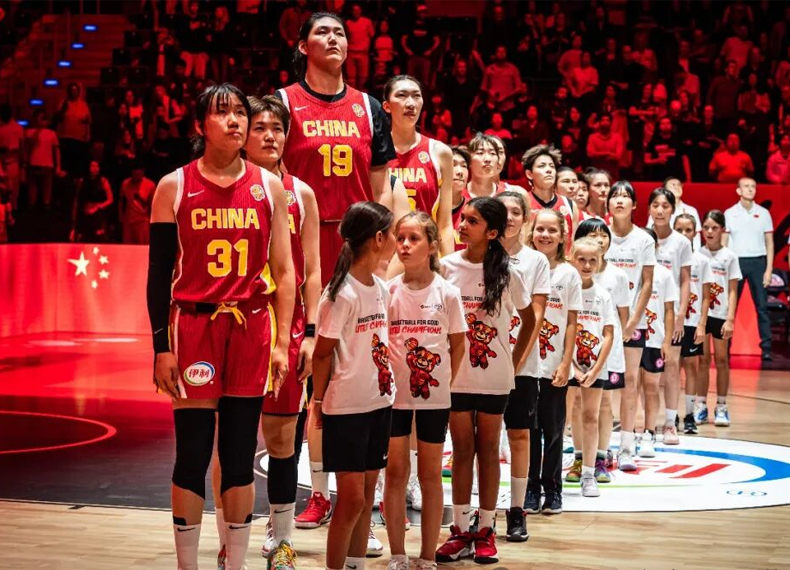
The 2026 FIBA Women’s Basketball World Cup was held in Berlin, Germany, from September 4 to 13. China reached the quarter-finals before losing 61–90 to France.
For viewers watching on television or streaming platforms, fast breaks, jump shots, player movements and even details such as uniforms and facial expressions need to remain clear throughout the game.
That places much higher demands on basketball arena lighting than simply making the court “bright enough.”
So what does a professional basketball lighting system need to deliver for televised competition—and how can these requirements be translated into a real lighting project?
1. FIBA Basketball Lighting: Start With the Competition Requirements
For international basketball venues, lighting design needs to take into account both player and spectator visibility as well as the requirements of television production.
FIBA’s Venue Guide states that sports lighting is a critical part of venue design and that modern requirements are strongly influenced by broadcasters and the need to deliver high-quality images. It also recommends designing permanent lighting systems around the highest level of competition a venue intends to host.
For high-level basketball venues, several lighting parameters become particularly important:
- Horizontal illuminance
- Vertical illuminance
- Main-camera illuminance
- Illuminance uniformity
- Glare control
- Color rendering
- Flicker performance
- Optical distribution
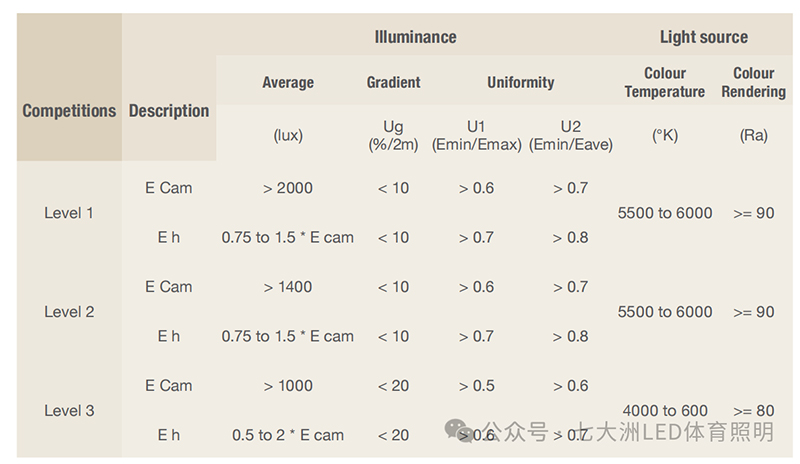
FIBA’s current Venue Guide gives an average horizontal illuminance range of 1,500–3,000 lux, with 3,000 lux recommended for venues intended to host major competitions. It also lists an average vertical illuminance of 1,700 lux and average main-camera illuminance of 2,000 lux for the Principal Playing Area.
These figures should not be treated as a universal “one-size-fits-all” specification. The exact requirements depend on the competition, venue configuration and applicable FIBA regulations.
The important point is that professional basketball lighting is a multidimensional design problem—not simply a question of fixture wattage or average lux.
2. Horizontal Uniformity: Avoid Bright and Dark Areas
A basketball court needs consistent illumination across the playing area.
If one part of the court is significantly darker or brighter than another, the difference may become visible on camera as players move across the court.
For broadcasters, this can create inconsistent exposure and visible variations in image brightness.
For players, uneven illumination can also make it less comfortable to track the ball and read the playing environment.
This is why lighting calculations should evaluate not only average illuminance but also uniformity across the Principal Playing Area and Total Playing Area.
FIBA's current requirements specify uniformity values for horizontal, vertical and main-camera illuminance, rather than relying on a single average lux figure.
In practical terms, the goal is simple:
The court should look consistently illuminated from every important viewing and camera position.
3. Vertical Illuminance Matters for Television
One of the biggest differences between ordinary basketball lighting and broadcast-oriented lighting is the importance of vertical illuminance.
Basketball is a three-dimensional sport.
Players jump, turn, pass and shoot while the ball moves rapidly through the air. Cameras also capture players from different directions rather than looking only at the floor.
If vertical illumination is insufficient or poorly distributed, the result can be less consistent images of players' faces, uniforms and movements.
FIBA therefore specifies vertical illuminance requirements in addition to horizontal illuminance. For the Principal Playing Area, its current Venue Guide lists an average vertical illuminance of 1,700 lux, with specific uniformity requirements.
This is one reason a professional basketball lighting design cannot be based solely on the question:
“How many lux are on the floor?”
The more relevant question is:
“How well can the players and ball be seen throughout the playing volume and from the camera positions?”
4. Glare Control Is Essential
A basketball venue can meet its illuminance targets and still have a lighting problem if the fixtures create excessive glare.
Direct glare can be uncomfortable for players and referees, particularly when looking upward during jump shots, rebounds or passes.
Reflected glare can also become a problem for television production. FIBA specifically notes that reflections from bright light sources on glossy court surfaces can create bright spots that affect camera images.
This makes optical design critical.
A professional basketball LED fixture should be selected and positioned according to:
- Mounting height
- Fixture location
- Beam angle
- Light distribution
- Player viewing angles
- Camera positions
- Court surface characteristics
The objective is not simply to reduce the amount of light.
It is to put the right amount of light in the right place while keeping unwanted light away from players, spectators and cameras.
5. Color Quality and Camera Performance
Modern basketball broadcasts capture considerably more visual detail than traditional television.
High-resolution cameras can reveal differences in color, exposure and lighting consistency that may not be obvious to spectators inside the venue.
For this reason, professional sports lighting should consider color rendering and camera compatibility as part of the overall system design.
Good color quality helps cameras reproduce:
- Player skin tones
- Team uniforms
- Court markings
- Basketball color
- Advertising graphics
- Arena surfaces
Flicker performance is another consideration, particularly for venues using high-speed cameras or slow-motion replay.
The lighting system therefore needs to be evaluated not only from the perspective of people inside the arena, but also from the perspective of the broadcast production team.
6. Why Fixture Wattage Is Not Enough
A common approach to sports lighting procurement is to compare fixtures by wattage.
For example:
600 W vs. 800 W vs. 1,000 W
But electrical power consumption alone does not tell you how effectively light reaches the playing area.
Two fixtures with similar wattage can produce very different results because of differences in:
- Optical efficiency
- Beam distribution
- Installation position
- Mounting height
- Light utilization
- Glare control
- Thermal management
This is why professional basketball lighting projects should begin with a photometric calculation.
The lighting designer should determine the required fixture quantity, optical distribution and installation angles according to the actual geometry of the venue.
In other words:
Do not buy watts first. Design the lighting first.
7. Three Basketball Projects: From FIBA Competition to National Broadcast Events
The technical requirements are only meaningful when they can be translated into real projects.
Different basketball venues may host different levels of competition, and therefore their lighting systems cannot simply follow one universal template.
FIBA U16 Women’s Asia Cup — Negeri Sembilan, Malaysia
The Karim Sports Hall in Negeri Sembilan was upgraded for an international FIBA competition environment.
Before the renovation, the existing lighting system could not meet the requirements for international basketball broadcasting.
Seven Continents supplied an LED sports lighting solution combined with intelligent lighting control. Through targeted optical distribution and a project-specific lighting layout, the upgraded system was designed to meet the requirements of the FIBA U16 Women’s Asia Cup and improve lighting uniformity while reducing glare.
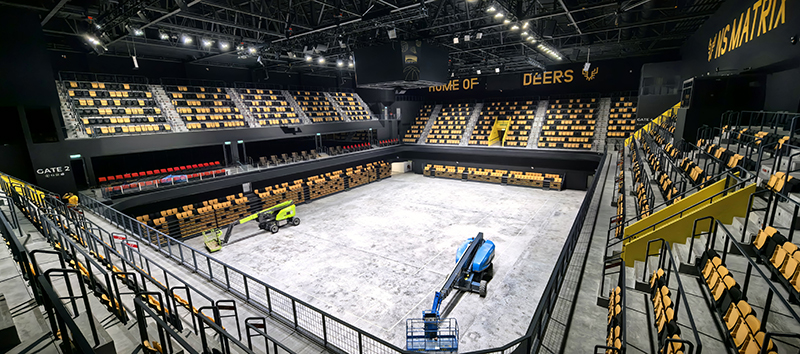
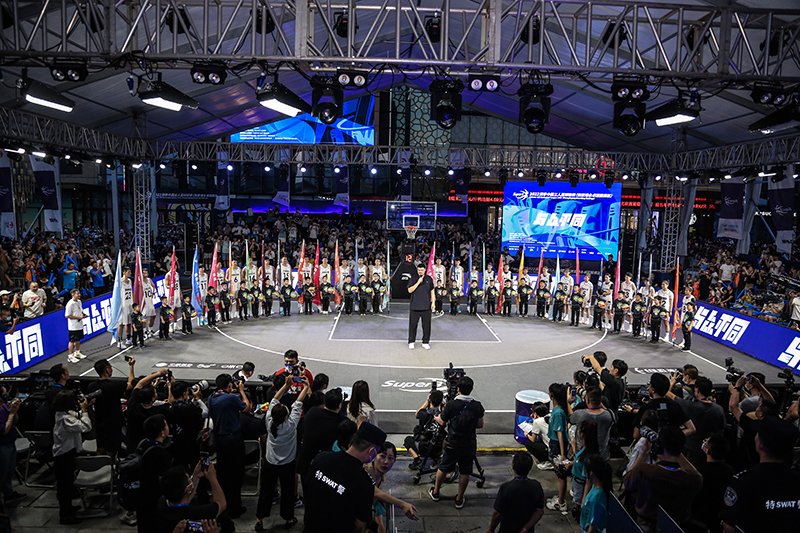
China Men’s 3x3 Super League — Zhangjiagang Sports Center
The Chinese Men's 3x3 Super League is a high-level domestic competition characterized by rapid transitions and continuous action.
The original lighting system did not provide sufficient illuminance and uniformity for high-definition broadcasting.
Seven Continents introduced the QDZ-300B LED sports lighting system, together with intelligent lighting control and precise optical distribution.
Following the upgrade, the venue was able to meet the lighting requirements for high-definition television broadcasting.
CBA Summer League — Futian Sports Park Gymnasium
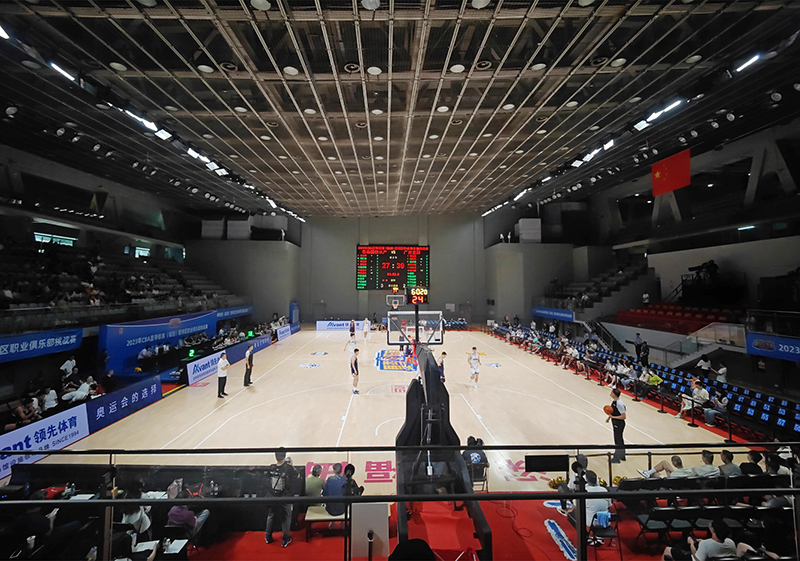
Futian Sports Park Gymnasium serves as a venue for Shenzhen Leopards and has also hosted the FIBA U18 Women’s Asia Cup.
The original lighting system had limitations in illuminance and uniformity, affecting the quality of televised images.
The venue was upgraded with the QDZ-300B LED sports lighting system.
The project improved illuminance and uniformity while creating a more comfortable visual environment for both players and spectators.
These three projects demonstrate the same basic principle:
Start with the competition and broadcasting requirements, then work backward to the lighting parameters, optical distribution and control system.
8. Smart Controls Add Flexibility to Basketball Arenas
A modern basketball venue rarely serves only one purpose.
The same arena may host:
- International competitions
- National-level competitions
- Professional league games
- Training sessions
- Youth tournaments
- Community activities
- Commercial events
These different applications do not necessarily require the same lighting level.
A smart lighting control system allows operators to create different lighting scenes for different activities.
For example:
Competition Mode
High-performance lighting for professional games and broadcasting.
Training Mode
Appropriate lighting for daily practice while avoiding unnecessary energy consumption.
Community Mode
A practical lighting level for recreational activities.
Event Mode
Flexible lighting control for ceremonies, presentations or other venue events.
This approach can make a sports venue more flexible while helping operators manage energy consumption and operating costs.
9. Design the Basketball Arena Around Its Highest Future Requirement
One of the most important lessons for new sports venues is to think beyond today's events.
FIBA's Venue Guide recommends that permanent sports lighting should be designed around the maximum requirements of the competitions the venue plans to host, because upgrading or replacing lighting later can be difficult and expensive.
For example, a venue that currently hosts local basketball games may eventually want to host:
- National championships
- International tournaments
- Professional league games
- High-definition television broadcasts
If the lighting system is designed only for today's basic requirements, a future upgrade may require additional fixtures, rewiring, repositioning or even a complete replacement.
A better approach is to define the venue's long-term competition requirements at the beginning of the project.
10. What Should You Check Before Buying Basketball LED Lights?
For a new basketball arena or a lighting renovation project, buyers should look beyond product wattage and unit price.
A practical checklist includes:
Lighting performance
- Average horizontal illuminance
- Horizontal uniformity
- Vertical illuminance
- Main-camera illuminance
- Lighting uniformity from key camera directions
Visual comfort
- Glare control
- Direct glare
- Reflected glare
- Player viewing angles
- Spectator comfort
Broadcast performance
- Flicker performance
- Color rendering
- Camera-facing illumination
- Consistent exposure
- High-speed and slow-motion camera compatibility
Fixture quality
- Optical distribution
- Thermal management
- Protection rating
- Driver reliability
- Long-term maintenance requirements
Control system
- Dimming
- Lighting scenes
- Competition and training modes
- Intelligent control
- Energy management
Most importantly, ask the supplier for a professional lighting calculation based on your actual venue dimensions and fixture installation positions.
A product specification sheet alone cannot demonstrate whether a lighting system will perform correctly in a real basketball arena.
Professional Basketball Lighting Starts With the Whole Venue
The 2026 FIBA Women's Basketball World Cup is a useful reminder that what viewers see on screen depends on much more than the action on the court.
Behind every clear broadcast image is a carefully designed lighting environment.
For professional basketball venues, the key requirements go beyond brightness. Horizontal illuminance, vertical illuminance, uniformity, glare control, optical distribution, color quality and broadcast performance all need to work together.
For lighting manufacturers and venue owners, this means the right question is not:
“How powerful is this LED light?”
It is:
“Can this lighting system deliver the visual performance required by the competition, the players, the spectators and the cameras?”
That is the foundation of professional basketball arena lighting—and the starting point for designing a venue that is ready not only for today's games, but also for tomorrow's competitions.

 Service Hotline:
 Email:
 Add:
Add: