
 English
 Spanish
 Russian
 Arabic
 Italian


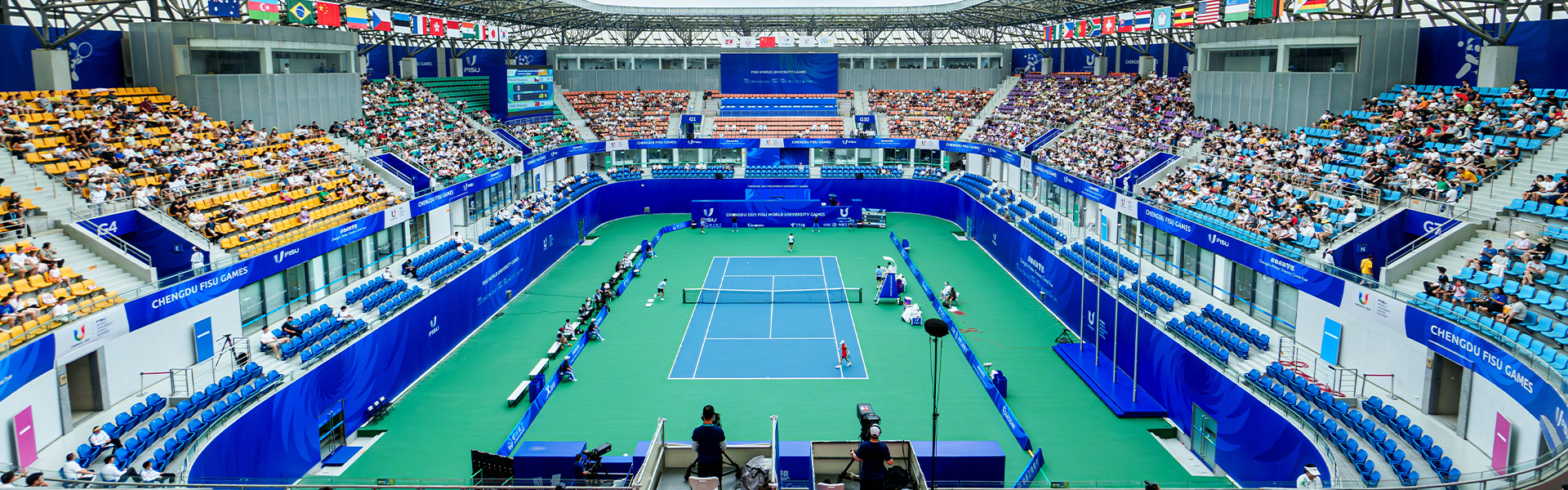
LED Sports Lighting: Extreme Temperature Resistance & Flame-Retardant Testing Explained
01 Why Are Extreme Environmental Tests So Important for Sports Lighting?
Have you ever wondered how the quality and reliability of our sports lighting fixtures are ensured?
A football stadium may be exposed to intense summer heat, while an ice hockey arena may operate in sub-zero temperatures throughout the year. If plastic components or internal wiring inside a lighting fixture fail to meet flame-retardant requirements, they can become a serious safety risk.
A professional sports lighting system is expected to operate reliably for five, eight, or even more years after installation. Sports venues are also located in a wide range of environments around the world—from hot and humid tropical regions to extremely cold climates and coastal areas exposed to high levels of salt spray corrosion. Environmental conditions can vary dramatically.
If a lighting fixture cannot withstand high temperatures, the lifespan of electrolytic capacitors in the power supply can be significantly reduced. As a general rule, every 10°C increase in operating temperature can reduce capacitor life by approximately half. This can accelerate LED light depreciation and potentially cause a venue that initially meets broadcasting requirements to fall below the required level after only a year.
If a fixture cannot withstand extremely low temperatures, it may fail to start or operate properly in freezing conditions, potentially affecting scheduled events.
And if the materials used in the fixture do not meet flame-retardant requirements, an electrical failure could potentially lead to a fire, with serious consequences.
That is why, at SCL Sports Lighting, every new lighting fixture must undergo a comprehensive series of extreme environmental tests before final product approval.
These tests are not optional spot checks—they are mandatory quality-control procedures.
Today, let's take a closer look inside the extreme environmental testing laboratory at Seven Continents' LED sports lighting facility and see how a professional sports light is put through the ultimate "fire and ice" challenge.
02 From -40°C to 85°C: A 120°C+ Temperature Challenge
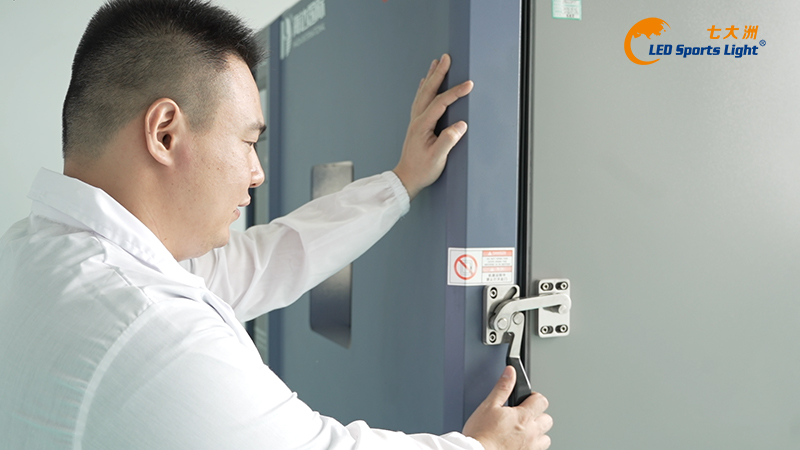
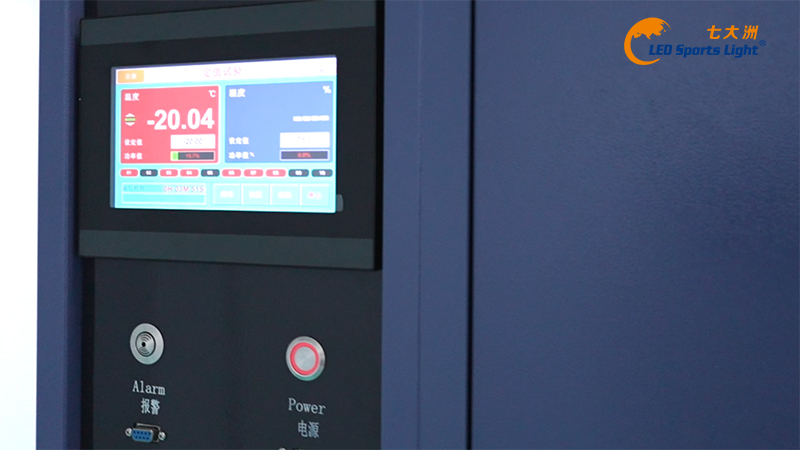
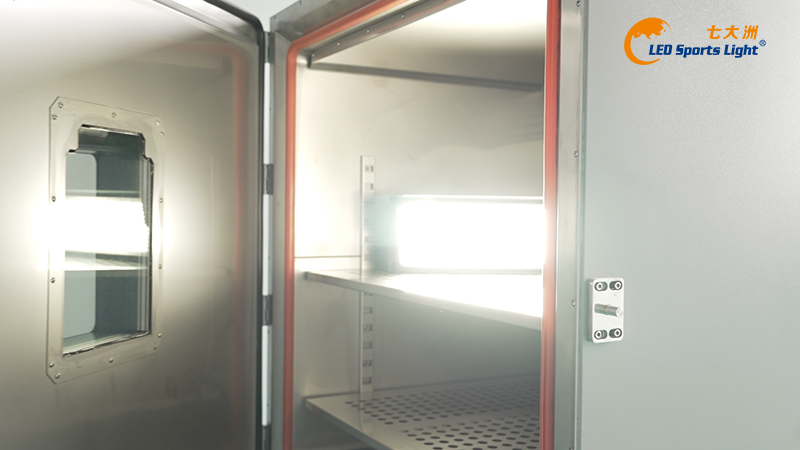
The core equipment in the extreme environmental laboratory is a high- and low-temperature test chamber.
This chamber can simulate extreme temperatures ranging from -40°C to 85°C.
The testing process is straightforward but demanding.
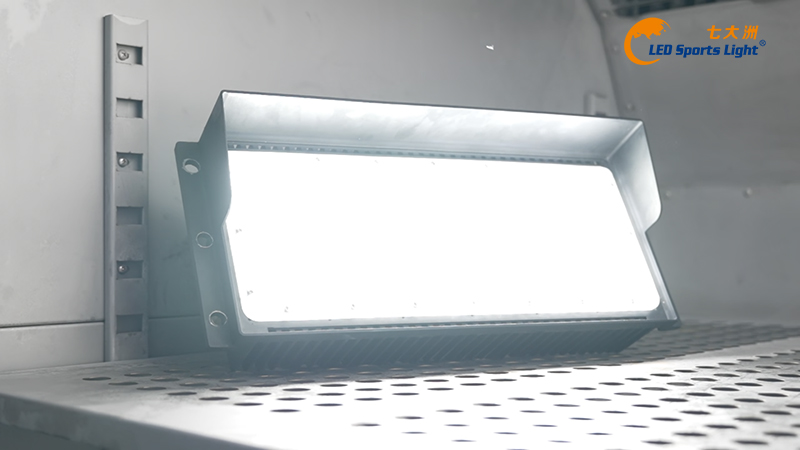
First, the lighting fixture is placed inside the test chamber and operated under an 85°C high-temperature environment. Engineers monitor the fixture for signs of aging or abnormal performance.
The temperature is then rapidly changed to -40°C, where the fixture is tested to verify whether it can still start and operate normally under extremely cold conditions.
After one complete test cycle, the fixture has experienced a temperature difference of more than 120°C.
Only products capable of passing these extreme conditions can qualify as compliant products.
Why were 85°C and -40°C selected?
The 85°C condition is designed to simulate the extreme heat that sports lighting fixtures may experience in outdoor stadiums exposed to intense summer sunlight. The surface temperature of a metal lighting housing under direct sunlight can be significantly higher than the surrounding air temperature.
The -40°C condition represents extremely cold operating environments, such as outdoor sports venues in northern regions or ice hockey facilities.
03 Physical Flame Testing: Flame Retardancy Is a Critical Safety Requirement
Another critical safety requirement for sports lighting fixtures is flame retardancy.
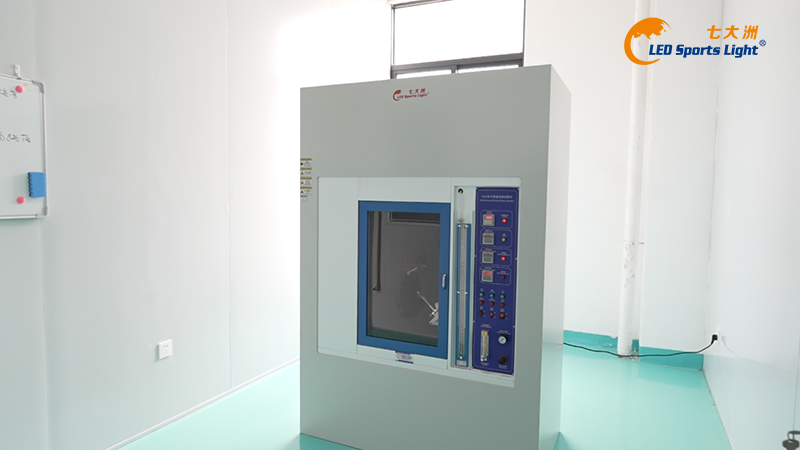
The extreme environmental laboratory is equipped with physical flame-testing equipment specifically designed to evaluate the fire resistance and flame-retardant performance of lighting materials.
The testing method is straightforward.
Plastic components from the lighting fixture are positioned vertically and exposed to a flame for 10 seconds. After the flame source is removed, engineers observe whether the flame extinguishes automatically.
The wiring undergoes an equally demanding test.
The cable is exposed to a flame for 5 seconds. A qualified cable must show no sustained burning after the test.
Passing this test helps demonstrate that the materials used in the lighting fixture will not contribute to the spread of fire in the event of an unexpected failure.
This testing is particularly important for sports venues because they often contain large numbers of people and extensive electrical equipment.
If a fire occurs, the consequences can be severe.
For this reason, every component—from the lighting housing and cables to connectors and other internal materials—must meet strict flame-retardant requirements.
There is no room for compromise when it comes to safety.
04 From the Laboratory to the Sports Venue: Every Test Result Matters
Extreme environmental testing is not simply a final inspection before shipment.
It is a critical part of the entire product development and mass-production quality-control process.
Every new lighting fixture is tested during the design stage using high- and low-temperature test chambers and physical flame-testing equipment.
No matter how advanced the optical design is or how high the lighting output may be, a product cannot be finalized if it fails environmental testing.
During mass production, regular sampling inspections are carried out to ensure that products of the same model continue to deliver consistent performance under extreme environmental conditions.
This helps prevent variations between production batches from affecting product reliability.
05 Every Test Is a Commitment to Sports Venue Safety
At SCL Sports Lighting, every extreme environmental test report is subject to rigorous review during the product design process and must ultimately withstand real-world project verification.
These tests are not simply about meeting minimum testing requirements.
They represent our commitment to the safety and reliability of every sports venue, every competition, every athlete, and every spectator.
SCL Sports Lighting has established multiple professional testing and R&D facilities, including:
- Optical Laboratory
- Thermal Management Materials R&D Laboratory
- Lighting Simulation & Testing Facility
- Extreme Environmental Testing Laboratory
The extreme environmental laboratory is just one part of our comprehensive product testing system.
For the largest indoor ice sports venue in western China, SCL Sports Lighting provided a complete sports lighting system that underwent rigorous cold-resistance and low-temperature testing.
The lighting system continues to deliver stable and uniform illumination even under extremely cold conditions.
Regardless of severe winter weather, the lighting on the ice remains consistent.
Since commissioning, the system has operated reliably for three years, successfully supporting events including the 16th Gansu Provincial Games.

 Service Hotline:
 Email:
 Add:
Add: