
 English
 Spanish
 Russian
 Arabic
 Italian


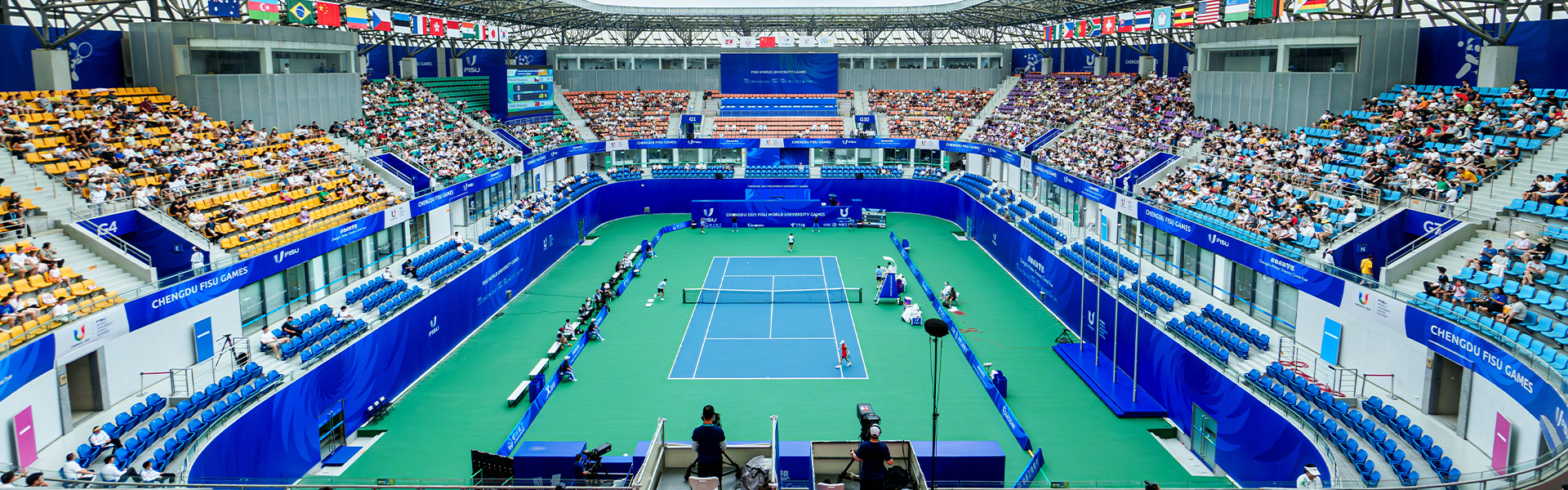
Complete Guide to Waterproof Testing for LED Sports Lighting: How IP Ratings Ensure Long-Term Reliability
Introduction
In professional sports venues, LED sports lighting fixtures are usually installed on poles ranging from 15 to 25 meters high. Once a fixture fails, replacement requires specialized lifting equipment and significant maintenance costs.
However, the bigger challenge is not only the repair itself. Water ingress inside a lighting fixture usually happens gradually. It may start with lens fogging and reduced light output, followed by moisture damage to the driver and electrical components, eventually causing complete fixture failure.
For outdoor stadiums, football fields, tennis courts, and high-humidity facilities, waterproof performance is one of the key factors determining the long-term reliability of LED sports lighting systems.
Why Must Professional Sports Lights Pass Waterproof Testing Before Delivery?
Most sports venues are open structures where lighting fixtures are continuously exposed to changing weather conditions.
During heavy summer storms, strong winds can drive rain almost horizontally toward the fixtures. High-pressure water flow can directly impact critical areas such as:
- Housing joints
- Heat dissipation openings
- Cable entry points
Even a tiny sealing defect can become a potential path for water penetration over long-term operation.
Once moisture reaches the driver compartment, it may cause performance instability, electrical failures, or even complete fixture damage. For high-mounted stadium lights, replacement costs can be several times higher than the fixture itself.
Water-based sports facilities, such as swimming pools and diving centers, create additional challenges.
Chlorine-containing air combined with high humidity can create a mildly corrosive environment, gradually affecting sealing materials and electronic components.
Therefore, professional LED sports lighting must be designed and tested against:
- Heavy rain impact
- High humidity conditions
- Temperature fluctuations
- Long-term moisture penetration risks
Only lighting systems that pass strict waterproof testing can provide reliable illumination for professional sports venues.
From Water Spray to Full Immersion: How LED Sports Lights Are Tested for Waterproof Performance
From Water Spray to Full Immersion: How LED Sports Lights Are Tested for Waterproof Performance
To verify real-world protection capability, professional laboratories simulate different water exposure conditions and conduct systematic waterproof testing on LED sports lighting fixtures.
These tests commonly include IP protection levels such as IPX5, IPX6, and IPX7, representing different environmental challenges:
- Continuous heavy rain exposure
- Wind-driven water impact
- Temporary underwater immersion
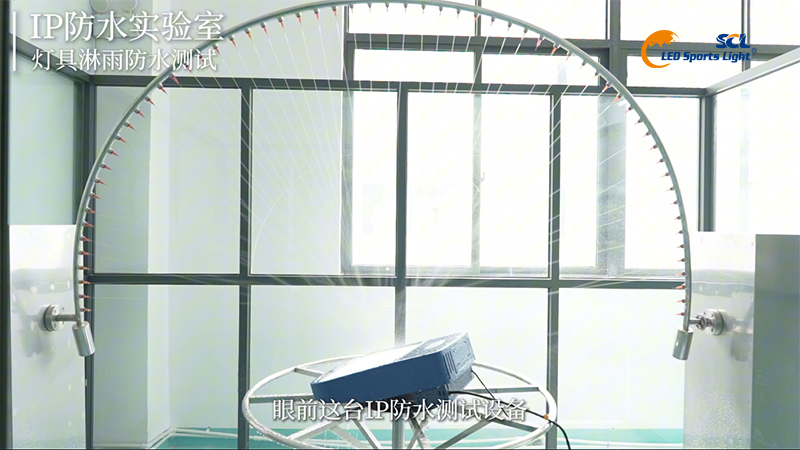
Rain Spray Testing: Simulating Extreme Weather Conditions
IPX5 and IPX6 tests are designed to evaluate a fixture’s resistance against continuous water spray.
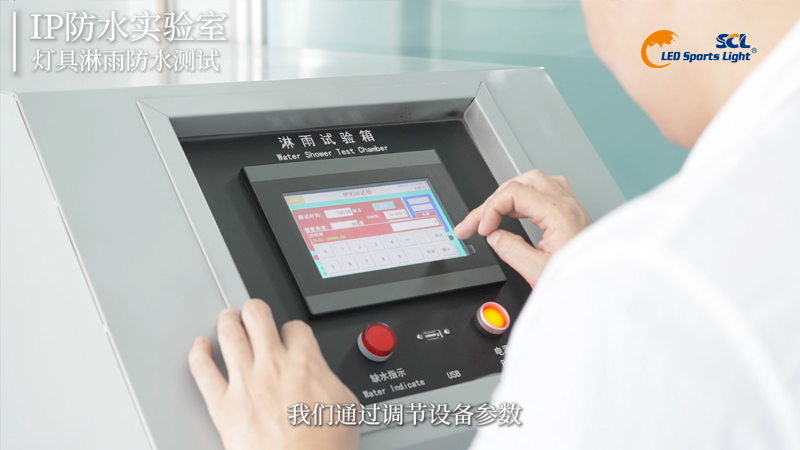
During testing, specialized equipment controls:
- Water pressure
- Flow rate
- Spray direction
to expose the fixture from multiple angles.
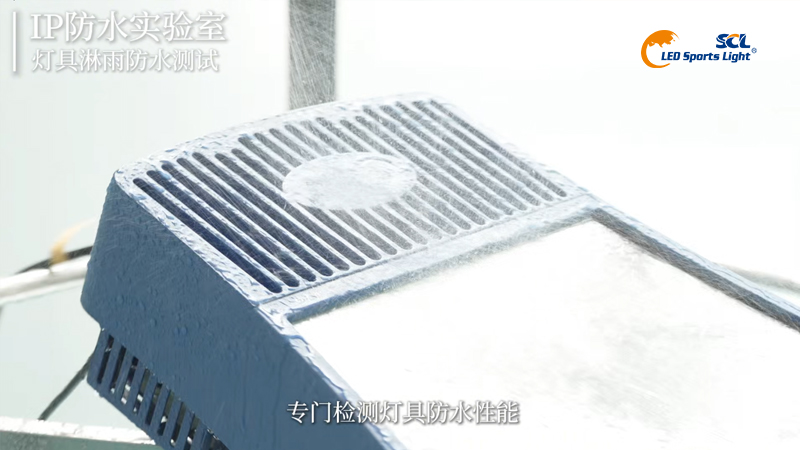
Among them, IPX6 testing represents a more demanding condition, simulating powerful rain impact during severe storms.
Critical areas including:
- Housing connections
- Heat dissipation structures
- Cable entry points
must withstand high-pressure water exposure without leakage.
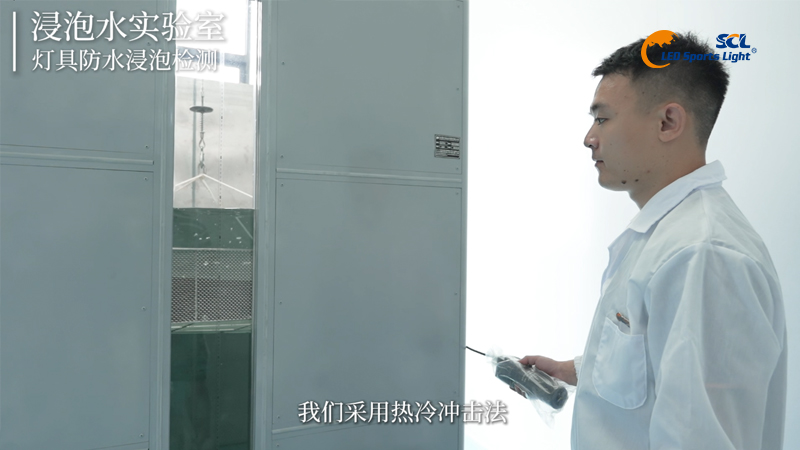
Many people assume that passing a water spray test is enough to prove a lighting fixture is waterproof. In reality, temperature fluctuations are often the greatest challenge to long-term waterproof performance.
Outdoor sports lights experience continuous thermal cycles every day:
- Strong sunlight during the day
- Rapid cooling at night
- Heat generated while operating
- Cooling immediately after being switched off
These cycles cause the air inside the fixture to expand and contract repeatedly, creating what engineers often describe as a "breathing effect."
When the fixture cools rapidly, negative pressure can develop inside the housing. Moisture may then be drawn through microscopic gaps that are invisible to the naked eye.
This phenomenon is known as Negative Pressure Suction, one of the most common causes of waterproof failure in outdoor lighting products.
To identify these hidden risks before products reach the market, professional laboratories perform thermal shock testing.
Fixtures are heated first and then immediately exposed to cold water spray or immersion. The sudden temperature change amplifies any weakness in the sealing system.
Only products that successfully pass this demanding test can deliver dependable waterproof performance throughout years of outdoor operation.
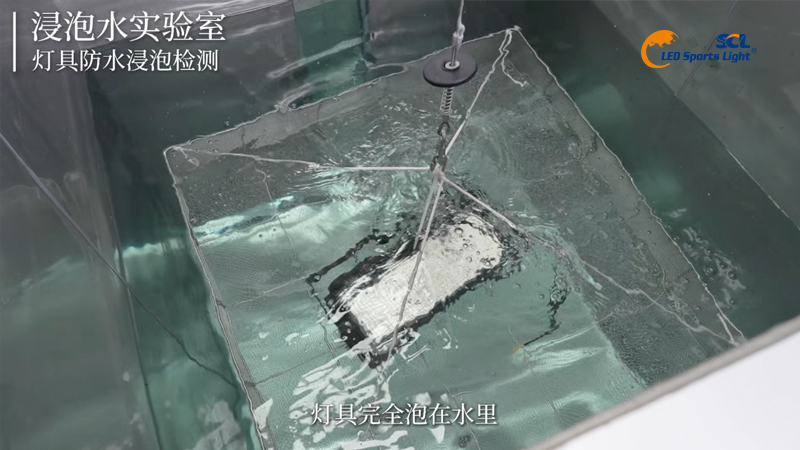
Passing a waterproof test involves much more than completing the spray or immersion procedure.
After testing, engineers carefully disassemble each fixture to inspect critical components, including:
- Optical chamber
- Driver compartment
- Electrical connectors
- Sealing interfaces
Even the slightest trace of moisture or condensation is documented and evaluated.
Every test also follows a strict quality assurance process, including equipment verification, record validation, and engineering review to ensure the results are accurate, reliable, and fully traceable.
Waterproof Protection Is a Complete Engineering System
Outstanding waterproof performance is never achieved by a single component. It results from a comprehensive engineering approach that integrates design, manufacturing, and testing.
From the earliest stages of product development, engineers focus on:
- Reducing housing joints
- Using industrial-grade waterproof connectors
- Balancing heat dissipation with sealing performance
- Improving die-casting precision
- Optimizing sealing and potting processes
Even a minor manufacturing defect can become a long-term source of water ingress under real outdoor conditions.
For professional LED sports lighting, true reliability comes from a complete waterproof engineering system—not simply an IP rating printed on the specification sheet.
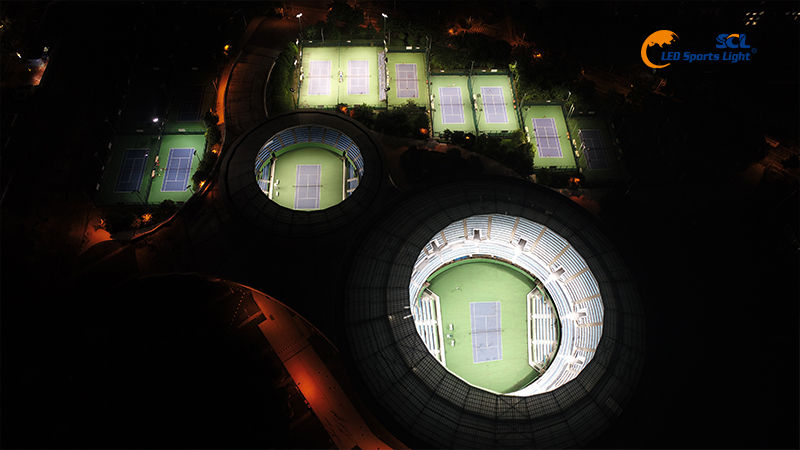
At SCL, every LED sports lighting fixture undergoes comprehensive waterproof verification before production is finalized, ensuring dependable performance in heavy rain, humid environments, and long-term outdoor applications.
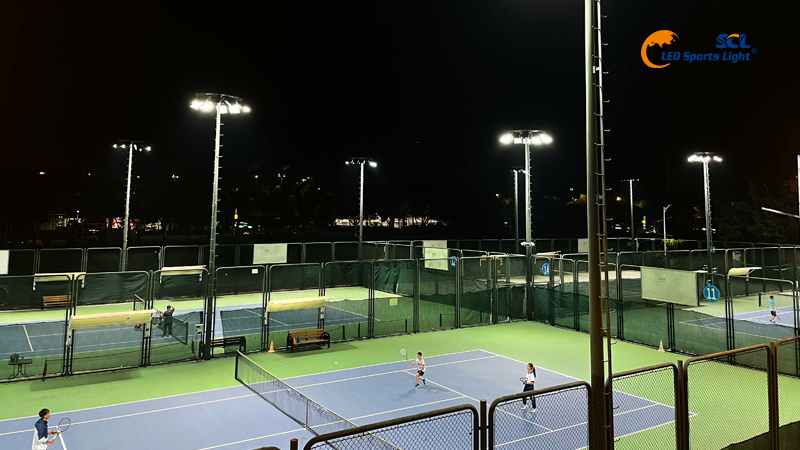
Q1. What IP rating is recommended for outdoor LED sports lighting?
EN: Professional outdoor sports lighting is typically designed to achieve IP65, IP66, or higher, depending on the application. Higher IP ratings provide better protection against water and dust.
Q2. Why is waterproof testing important for stadium lights?
EN: Stadium lights operate in demanding environments where rain, humidity, and temperature changes can affect long-term reliability. Waterproof testing helps verify that fixtures can withstand these conditions.
Q3. Is an IP rating alone enough to judge product quality?
EN: No. A reliable lighting fixture depends on engineering design, material quality, manufacturing precision, and comprehensive laboratory testing—not just the IP rating.

 Service Hotline:
 Email:
 Add:
Add: